Survival Switch
Survival Switch

Team: Lars van der Heide, Tobias Ackermann, Jan Paul Medema
Resistance to regulated cell death (RCD) — including apoptosis — is a hallmark of cancer and an essential step during transformation of normal cells. Re-establishing sensitivity to and induction of cell death is the goal of most cancer therapies.
In PD, apoptosis is one form of RCD that may be involved, but the exact mode of death in these contexts remains complex. Evident is that in PD impaired survival of dopaminergic neurons contributes to progressive neurodegeneration, while in CRC, resistance to apoptosis underlies tumour growth and therapy evasion. Although these diseases represent opposing outcomes of cell fate dysregulation, both share key molecular regulators, such as the Bcl2-family proteins. Although Bcl2 family proteins are not suitable therapeutic target themselves e.g. as they are too broadly expressed and not tissue specific, identifying their context-specific and tissue specific interactors may uncover new molecular switches controlling death or survival.
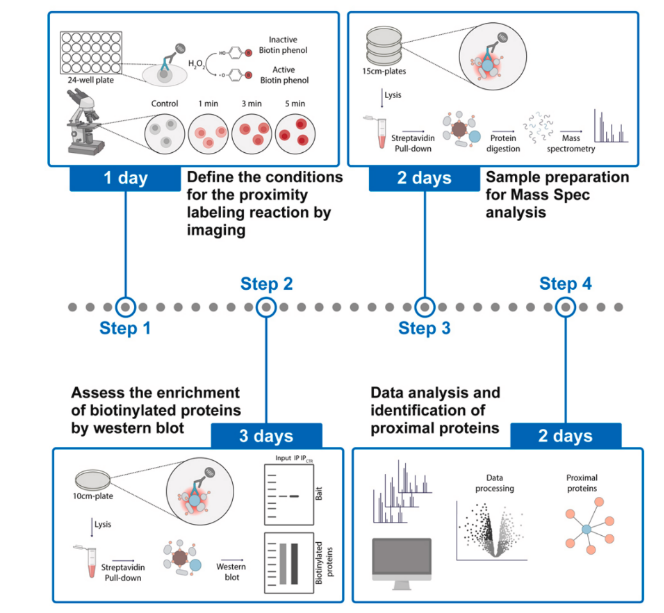
We will apply the Biotinylation by Antibody Recognition (BAR) method, an innovative proteomic technique that enables targeted, spatially resolved protein labeling without genetic modification. BAR uses horseradish peroxidase (HRP)-mediated tyramide signal amplification to biotinylate endogenous proteins in close proximity to a defined target, preserving subcellular context. Labeled proteins will be enriched using streptavidin pull-down and analyzed by LCMS/MS to generate high-resolution interactomes. This allows unbiased discovery of native interaction partners of selected Bcl2-family proteins directly in cell models and patient tissues. After optimization in cellular models (MN9D dopaminergic neurons and HCT116 colorectal cancer cells), we will apply the method to patient-derived material (post-mortem PD tissue and CRC biopsies) to identify clinically relevant interactors.
Expected outcomes:
– Curated list of candidate interactors representing potential therapeutic targets.
– Standardized, validated BAR workflow applicable to cells, animal tissue, and human material.